I wrote and designed a (fictional) online course for the Ontario Museum Association (OMA).

Created in response to a new province-wide initiative undertaken by the OMA to make museums and their collections more cultural inclusive by 2025 (Inclusion 2025), the course is intended to be hosted on the association’s website as required training for museum professionals.

The choice to create an online course (instead of an in-person one) was guided in part by the requirements of the pandemic, but will also help to make it a flexible option for future educational purposes.

Below are a few screenshots from the course. View the complete course, created using Articulate Storyline 360.

For copies of the course plan, storyboard and script, select the buttons at the bottom of the page.
The introductory slide for an e-learning course, which reads Welcome to Inclusion in Museum Collections and Display: Strategies for Creating a Culturally Inclusive Visitor Experience, followed by a button that reads Get Started!
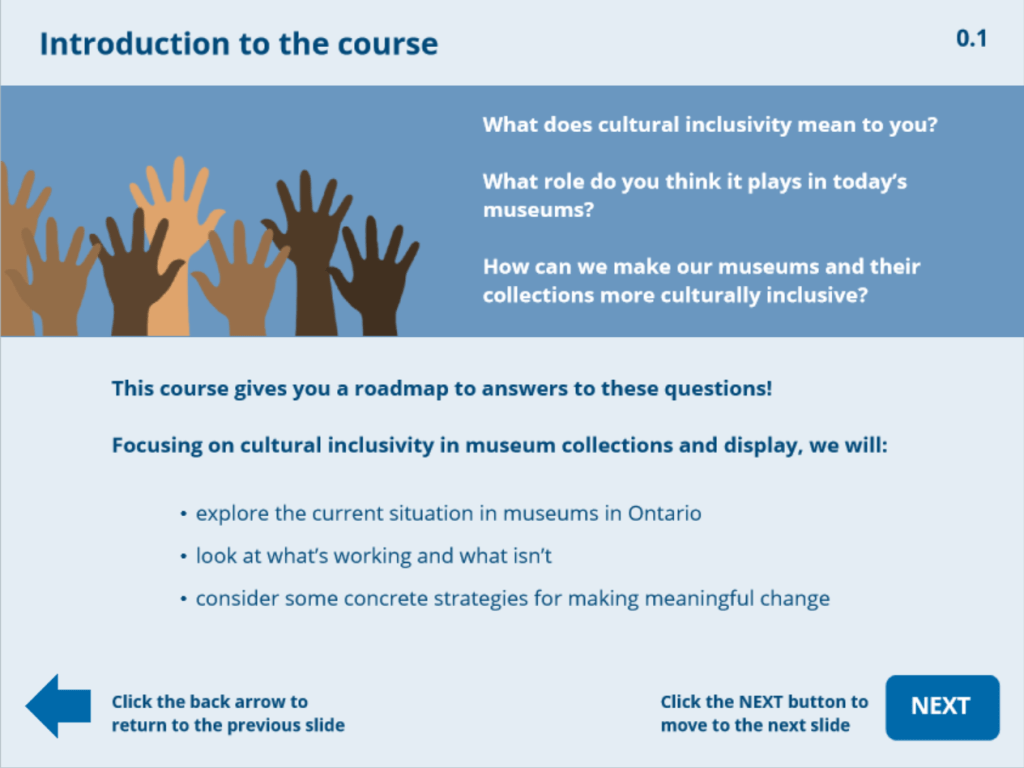
A slide that reads Introduction to the course, with information about the course contents and an image of people's hands.
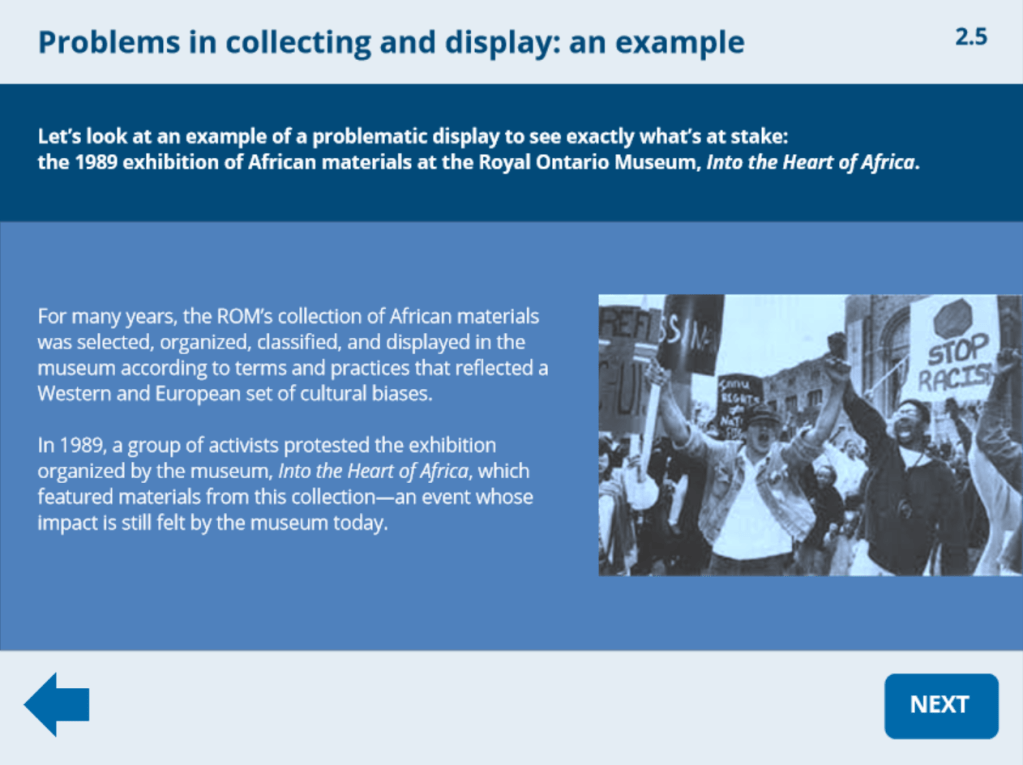
A slide that reads Problems in collecting and display: an example, with information about the 1989 exhibition of African materials at the Royal Ontario Museum, Into the Heart of Africa, accompanied by a black and white image of protesters outside the museum.
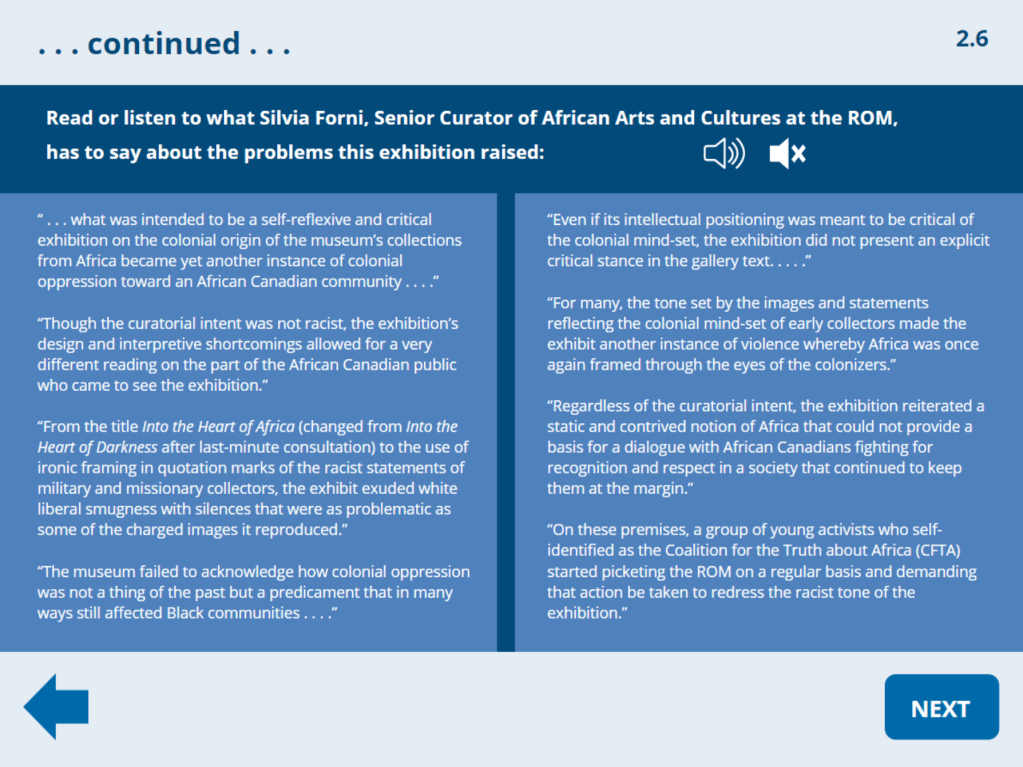
A slide with additional information about the problematic exhibition and protest at the Royal Ontario Museum.
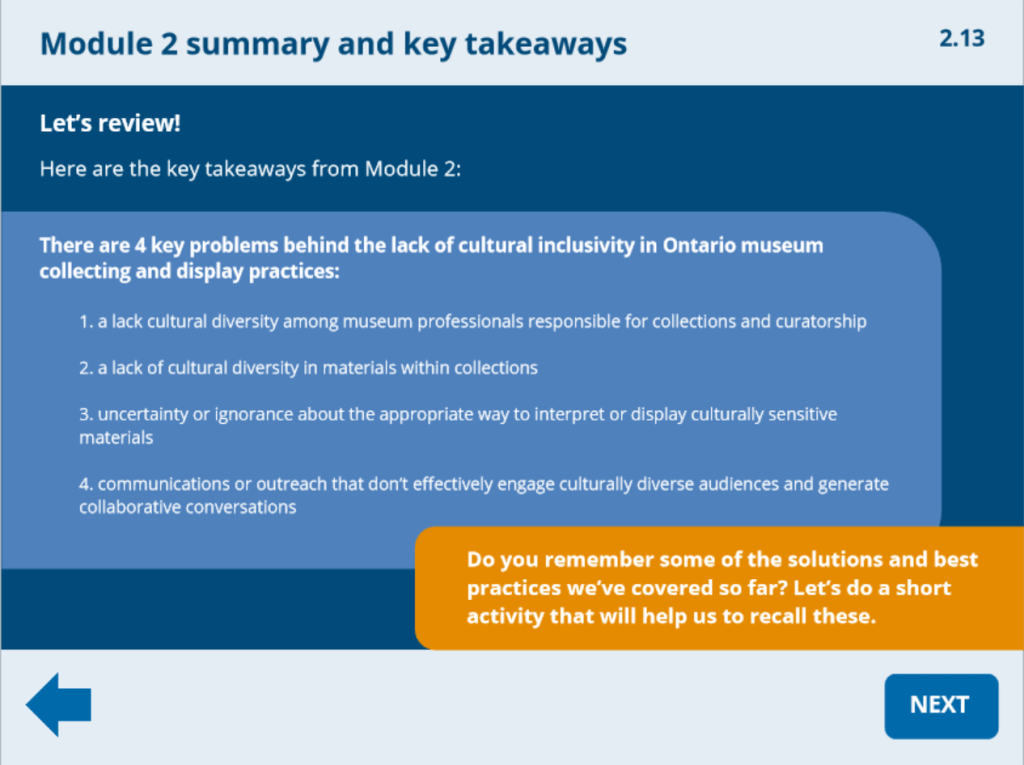
A slide that reads Module 2 summary and key takeaways, with information outlined for the learner.
A slide that reads Module 3. Inclusive Terminology and its Place in Cultural and Historical Interpretation, with an image of people wearing masks.
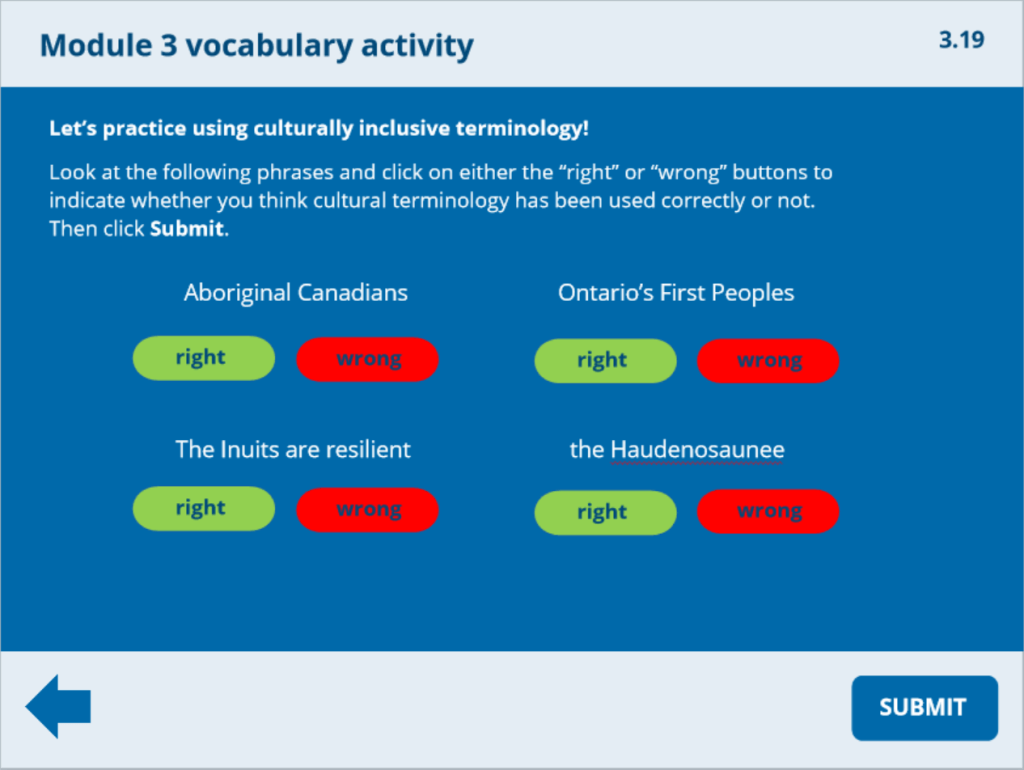
A slide that reads Module 3 vocabulary activity, with a game that asks learners to choose the correct terminology from among different options.